

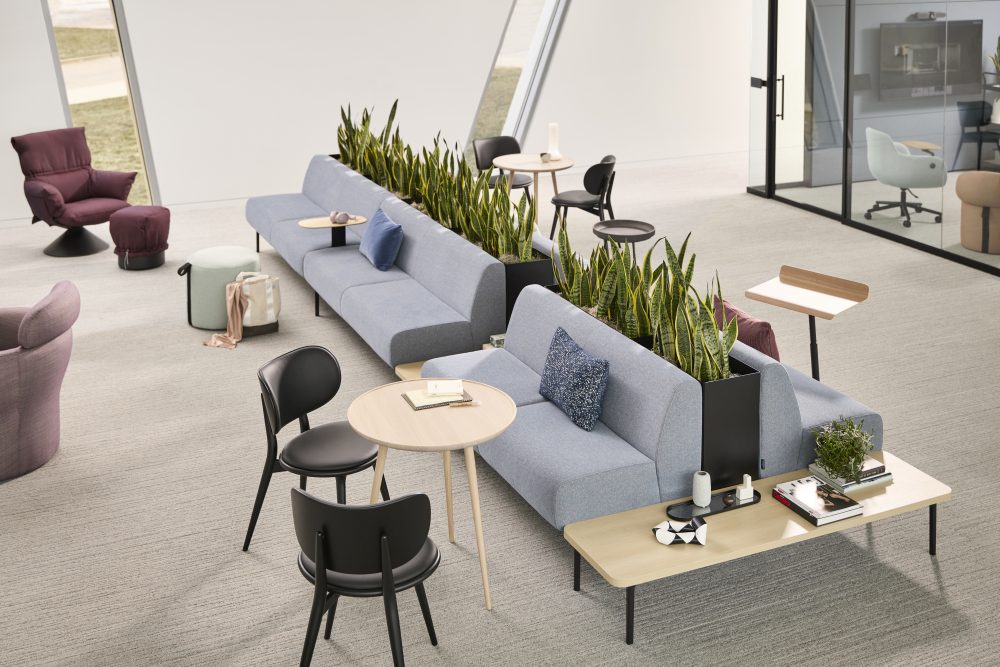
Walk through an office on any given day and you’ll probably find people doing very different things.
Someone is deep in focused work. Someone else needs to jump on a video call. Two coworkers need a place to talk through an idea. Another person wants to move away from their desk for a while without necessarily stopping work.
Yet it’s easy to approach workplace design as though everyone needs essentially the same thing.
They don’t.
One workplace may need to accommodate different generations, preferences, needs and work styles. That’s why thoughtful workplace design often comes back to a simple idea: choice.
Rather than expecting one type of environment to work for everyone, we can think about how the workplace gives people different ways to move through their day.
There’s No One-Size-Fits-All Workplace
One misconception our design team sees is the idea that adding one new or trendy feature to an office will suddenly accommodate the needs of an entire staff. The reality is much more nuanced.
There can be as many as four generations sharing one workplace, and the needs and work styles represented across that workforce can vary. All of them matter.
That doesn’t mean an office needs to provide every possible type of space. It means we need to think carefully about what the people using this particular workplace actually need.
Start With What People Are Doing
Before choosing furniture, consider what needs to happen throughout the workday.
Where can someone go when they need fewer distractions?
Where can coworkers talk through an idea together?
Where do video calls happen?
Can people change posture or move away from their primary workstation during the day?
Is there somewhere to work in a more relaxed setting?
Questions like these shift the conversation from “What furniture should we buy?” to “What does our workplace need to help people do?”
That’s a much more useful place to start.
Think Beyond What the Workplace Looks Like
How people experience an environment isn’t limited to the floor plan, furniture or finishes.
Our design team is increasingly interested in how workplaces can accommodate different sensory experiences, too.
Consider something as simple as a private pod or phone booth. Beyond providing separation from the larger workplace, features such as controllable lighting, acoustic support, airflow or even ambient sound can change the experience of being inside the space.
Sometimes people need interaction and energy around them. At another point in the day, they may benefit from an environment that allows them to turn some of that input down.
It serves as a reminder that the workplace experience involves more than what we see. Light, sound, privacy and atmosphere can all contribute to how a space feels and functions.
Different Spaces Can Support Different Moments
There’s no single product, or single type of space, that needs to do everything.
Some of the products our design team is drawn to right now illustrate just how different workplace needs can be.
A height-adjustable table gives someone the ability to change posture and stand rather than remain seated at a computer throughout the day.
An acoustic pod can provide another option for video calls, conversations or moments when additional separation is useful. Features such as adjustable lighting and airflow can give the person using it greater control over the environment.
A lounge setting creates a completely different experience, bringing some of the comfort associated with home into the workplace while still giving people somewhere they can get things done.
Each serves a different purpose.
And that’s the point.
Choice Doesn’t Have to Mean More of Everything
Creating options doesn’t necessarily mean filling the office with more furniture.
It means being intentional about the environments you’re creating and understanding the purpose each one serves.
Traditional workstations can coexist with lounge areas. Open environments can be balanced with spaces offering more privacy. Collaborative settings can live alongside places designed for individual work.
The right mix will look different from one organization to another.
Which is exactly why there’s no universal formula for the perfect office.
Design Around Your People
A beautiful workplace isn’t successful simply because it photographs well. It needs to support the people who use it. That’s why the design process should start with listening.
How does your team work today?
Where do they experience friction?
Which spaces get used constantly?
Which ones sit empty?
Where could having another option make the workday easier?
Those answers can help determine which solutions deserve space in your environment, and which ones don’t. Because when one workplace needs to serve many different people, understanding those people is the first step toward designing a space that works.
Ready to make your workplace work for your team? Connect with us to get started.